
Larry Page Becomes World's Second-Richest Person: Net Worth, Real Impact, and the Ellison Shift
Title: Larry Page's $272 Billion Paper Kingdom: Built on AI Hype or Real Value?
Larry Page, co-founder of Google, is now the world’s second-richest person, surpassing Larry Ellison. The headlines are screaming about AI-fueled rallies and a near-$4 trillion valuation for Alphabet. But let's pump the brakes for a second and look at what’s actually driving this surge, beyond the breathless pronouncements.
Shares of Alphabet (Google's parent company) jumped 6.3% on Monday, adding to a year-to-date gain of nearly 70%. This dwarfs the performance of other megacaps. The catalyst? Reports that Meta Platforms (Facebook) is considering using Google's AI chips (TPUs) in its data centers by 2027, and potentially renting cloud-based chips as early as next year. A potential deal in 2027 is driving valuations today. That’s a long horizon in the tech world, practically an eternity.
The AI Mirage
The narrative is that Google’s new Gemini 3 model is the "golden child," outperforming ChatGPT. Salesforce CEO Marc Benioff is even tweeting about it (a pretty blatant marketing signal, if you ask me). But benchmarks can be misleading. Who’s doing the testing? What are the specific metrics? The data sources don't specify. The market seems to be reacting more to the idea of AI dominance than concrete results.
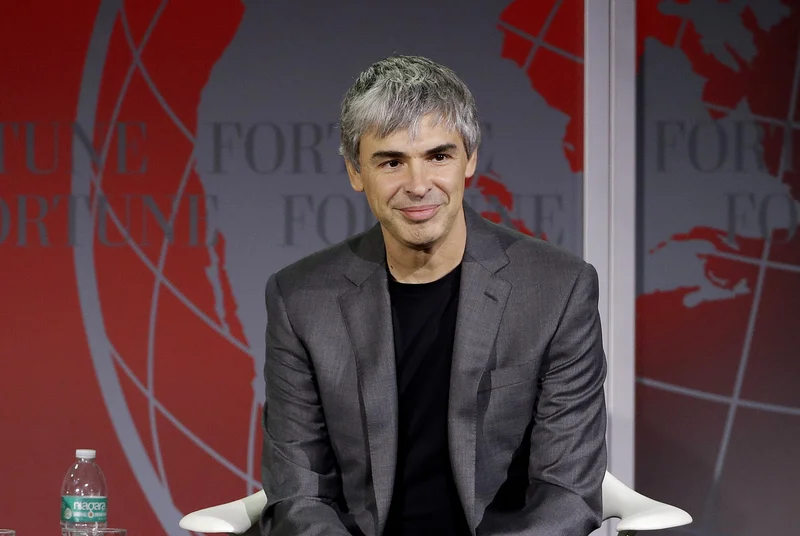
Page’s net worth supposedly jumped nearly $15 billion in a single session, bringing him to an estimated $272 billion. As reported by Forbes, Larry Page Passes Larry Ellison Becoming World’s Second-Richest. His wealth has ballooned from $50.9 billion in 2020 to $144 billion at the start of 2025. That's an eye-watering increase, and it's almost entirely tied to Alphabet's stock performance. But how much of that is sustainable, and how much is predicated on future AI dominance?
There's a discrepancy between the current performance and future expectations. Meta might use Google's chips in 2027. Gemini might be the best chatbot. These are future conditional promises, not today's realities. The stock market is forward-looking, sure, but it's also prone to irrational exuberance.
And this is the part of the report that I find genuinely puzzling. I've looked at hundreds of these wealth surges, and this one feels particularly detached from immediate revenue streams. The market is pricing in years of AI dominance now, based on speculative deals.
It's worth remembering that Larry Page stepped down as Google CEO in 2019. He's still a major stakeholder, of course, and benefits hugely from the stock's rise. But he's no longer at the helm, navigating the day-to-day challenges of the AI landscape. Does the market fully understand this distinction? Or are they simply betting on the Google name, regardless of who's in charge?
The rise of Larry Page's net worth can be viewed as a barometer of AI hype. It's a speculative bubble inflated by potential future earnings. The question isn't whether Google can dominate the AI space, but whether its current valuation accurately reflects that potential—or wildly overestimates it.