
BABA Stock: What's Driving Its Recent Moves and the Buy/Sell Debate
Generated Title: Alibaba's AI Gamble: Is It Paying Off, or Just Burning Cash?
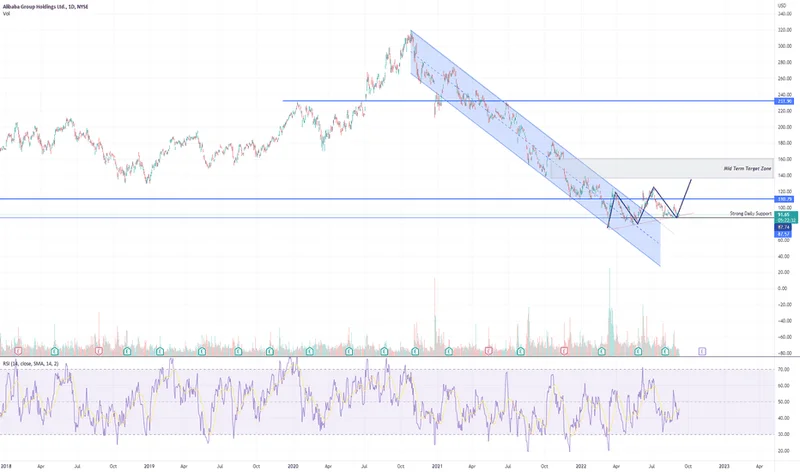
Alibaba's stock has enjoyed a resurgence, climbing over 80% in the past year. The narrative? Renewed confidence in China tech and a stabilizing core shopping business. Bank of America's Joyce Ju, while reaffirming a "Buy" rating, did trim the price target from $200 to $188, citing near-term e-commerce softness. So, what's the real story here? Is Alibaba genuinely turning a corner, or is this just another hype cycle fueled by AI promises?
Cloud's Silver Lining, Cash Flow's Dark Cloud
The Q2 FY26 earnings report paints a mixed picture. Revenue beat expectations, hitting 247.8 billion yuan (about $34.8 billion), a 5% year-over-year increase. However—and this is a big "however"—adjusted diluted EPS missed, coming in at 4.36 yuan against a consensus of 6.34 yuan. The discrepancy? Cash flow took a hit as Alibaba ramped up spending on AI, cloud infrastructure, and quick commerce initiatives.
Ju highlights the cloud business as a key strength, with revenue up 34% year-over-year to 39.8 billion yuan ($5.6 billion), exceeding estimates. AI-related revenue is supposedly experiencing triple-digit growth for nine straight quarters, now accounting for over 20% of cloud revenue. That sounds impressive, but let's dig deeper. What exactly constitutes "AI-related revenue?" Is it genuinely new business driven by innovative AI products, or is it simply re-categorizing existing services under the AI banner? I've looked at hundreds of these filings, and this level of abstraction makes it hard to trust the underlying growth story.
And this is the part of the report that I find genuinely puzzling. If AI is driving such significant cloud growth, why isn't that translating into better overall profitability? The increased spending on AI is clearly impacting cash flow, but where's the corresponding boost to the bottom line? Are these AI investments truly generating returns, or are they simply a costly attempt to chase the latest tech trend? What happens when all of the companies pull back on AI?
Quick Commerce: Less Bleeding, Still Bleeding
On the quick commerce front, the narrative is one of improving losses. The division reported a 36–37 billion yuan loss, which, admittedly, is better than expected. The loss per order has narrowed to about 5 yuan. Management projects losses to drop by at least half, with improvements supposedly visible in October. Ju expects losses to fall to around 20 billion yuan next quarter.
But let's be clear: "less bleeding" is not the same as "profitable." Alibaba is still hemorrhaging cash in this segment, and the promise of future improvement is just that – a promise. The question is, how long can they sustain these losses while waiting for quick commerce to turn a profit? And what are the long-term competitive dynamics in this space? Are they building a sustainable advantage, or are they simply subsidizing consumer convenience in a race to the bottom?
E-commerce: The Core Weakening?
The real cause for concern, in my opinion, lies in the e-commerce business. Ju flagged softer expectations for the December quarter, anticipating a slowdown in customer management revenue (CMR), which includes merchant ads and fees. The reasoning? Earlier pricing benefits are fading. According to a recent report, Alibaba Stock (BABA) Is a ‘Buy,’ Affirms Bank of America Despite Price Target Cut, despite these concerns, Bank of America maintains a "Buy" rating on the stock.
This is a critical point. If Alibaba's core e-commerce engine is losing steam, the entire investment thesis becomes shaky. The company can't rely on AI and quick commerce to compensate for weakness in its primary revenue driver. User traffic and engagement may be improving, but if that traffic isn't translating into increased revenue, it's a hollow victory.
A High-Stakes Game of Catch-Up
Alibaba's future hinges on its ability to translate AI investments into tangible profits and revitalize its core e-commerce business. The strong stock performance suggests that investors are buying into the AI narrative. But beneath the surface, the numbers tell a more nuanced story – one of rising costs, uncertain returns, and potential weakness in the company's traditional strengths. It is like betting on a horse race, but not knowing which horse is actually going to win.
Are They Building a House of Cards?
Alibaba is making big bets on AI and new ventures, but the core business needs to stay strong. Right now, it looks like they're spreading themselves too thin, hoping one of these bets pays off big before the old foundation crumbles. The market might be excited, but I'm not convinced.